
Boxed lunch catering can turn a Florence, SC meeting into a relaxed lunch everyone can count on. Individual meals are easy to hand out, and guests can settle in and enjoy a warm Southern plate without a long buffet line. Start with the headcount, service format, menu questions, and delivery plan. Notch8 Carolina Kitchen brings that hospitality to the office, with catering delivery available for orders of 10 or more plates.
What Should You Decide Before You Choose Boxed Lunch Catering?
Before selecting meals, establish the shape of the event. A clear plan helps the catering team understand what you need and helps your guests know when and where lunch will be available. The more definite your timing, location, and approximate count are, the more focused your menu conversation can be.
Write down the basics first:
Purpose: Is lunch for a working meeting, staff training, a client visit, or a team gathering?
Meal time: When should food be ready, and how long will guests have to eat?
Venue: Where will the group eat, and is there a separate place to receive the order?
Attendance: How many people are expected, and which responses are still pending?
Service: Do guests need individual meals, or might a shared catering setup fit better?
Dietary requests: What needs have attendees actually shared?
Receiving contact: Who will meet the delivery and stay reachable?
These details help distinguish a simple meal drop from a more involved event plan. For example, a small office meeting with assigned seats may favor individually organized meals. A longer staff gathering with a shared break may leave room to discuss a different arrangement. The current offerings and feasibility should always be confirmed with the catering team rather than assumed from the event type.Start by reviewing the catering overview and the current boxed lunch catering. The menu page is the better source for checking present choices; use the overview to understand the broader catering service. If you are comparing formats for a workplace meal, the office lunch catering guide offers another planning perspective.
How Can You Set a Useful Headcount?
A useful headcount is a confirmed number, not a hopeful guess. That number is how you make sure there is a warm plate for every person at the table. Collect responses in one place, note who is still undecided, and submit the final count seven days before service. The deadline is easier to meet when the RSVP date is set before invitations go out.
For a regular team meeting, check the attendee list against who will actually be present at lunchtime. For a training session or broader staff event, ask team leads to confirm their groups by a shared deadline. One coordinator should reconcile the replies so the order is not based on overlapping lists or duplicate responses.
Set an RSVP deadline that gives you time to resolve unanswered invitations.
Record each response as attending, not attending, or awaiting confirmation.
Check which invitees will be present during the meal period.
Track the number of people who have dietary requests separately from the total count.
Review the list with the event owner before submitting a final number.
Send the final event count seven days before service.
Consider a worked example: an office invites 28 people, but six have not replied. Do not assume all 28 will attend or place an order using only the 22 confirmed replies without checking whether late responses are likely. Ask the event owner to set a final RSVP time, follow up with the six people, and then provide the confirmed total by the required deadline. If the number remains uncertain, tell the catering team what is confirmed and ask how to proceed; do not treat an unconfirmed estimate as an agreed final order.For events with more than one session, count the people who need lunch rather than the total number of people registered for the day. A presenter arriving after the meal or a guest leaving before lunch may affect the meal count. Note who needs a meal set aside before the room opens, too. A simple roster with one row per attendee and a meal status column can make the handoff easier to manage.
What Menu Details Matter for an Office Meal?
The right menu is the one that fits the attendees, the schedule, and the current catering options. Notch8 serves Southern comfort food and has a dedicated catering menu, but items and prices can change. Confirm the choices available for your date before circulating a proposed menu or promising a specific item to coworkers.
Think about how the food will be eaten. When people have a short break or will eat at separate desks, individually arranged meals may make distribution more straightforward. When the group has time to sit together, ask whether another catering format would better suit the occasion. Do not assume every current menu item is offered in an individual box; ask the team which selections fit the format you want.
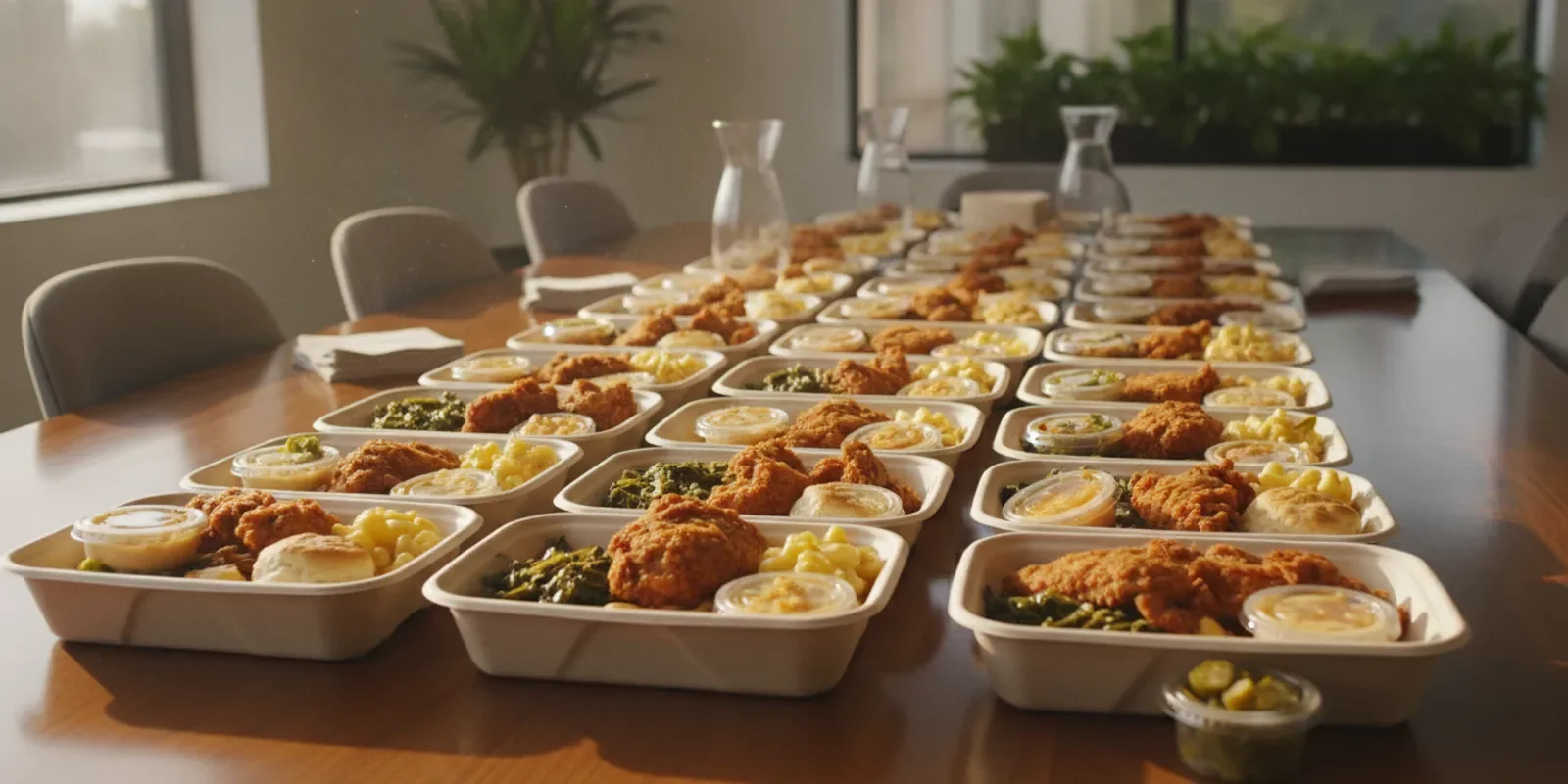
Before you settle on a menu, ask:
Which items are currently available for the requested date?
Can guests choose among meals, or should the group select one menu?
How should you collect and submit individual selections?
Are sides, condiments, napkins, and utensils included or separately arranged?
How will meals be organized or labeled at delivery?
Which dietary needs can the kitchen accommodate?
What items or service details affect the final cost?
It can help to compare the practical tradeoffs before making a request:
One agreed menu
A single selection can simplify ordering, communication, and distribution. It may be a useful starting point for a group with a short meal break or a coordinator who wants to keep choices easy to track. Confirm that the selected item is available and works for the event before treating the plan as settled.
Several meal selectionsIndividual choices may suit a group with different preferences, but they require a dependable way to collect each response and connect it to the right guest. Ask whether multiple selections are available, how the order should be organized, and whether labels can identify meals. Keep one updated list and submit it through the process the team confirms.
Shared catering service
A shared arrangement may work when attendees eat together and there is enough time and space for the setup. Ask what formats are currently offered and what the venue needs to provide. The aim is not to choose the most elaborate option; it is to match the service to the room, break length, and group.
For additional help weighing group quantities and service styles, read the bulk office lunch planning guide and the article about catering food for an office lunch. For a broader view of Southern dishes, the restaurant menu provides context, while the dedicated catering menu remains the place to check event choices.
Review Current Catering Options
How Should You Handle Dietary Needs?
Ask about dietary needs early and pass them to the catering team in clear, specific language. A preference, an intolerance, and an allergy are not interchangeable, so do not group them together or promise a meal is suitable without confirmation.
Use a respectful, practical process:
Invite guests to share relevant dietary needs when they respond.
Collect only the information needed to plan the meal, and share it only with people involved in arranging food.
Record the number of guests affected and the exact request they provided.
Ask the catering team what can be accommodated and how meals will be handled.
Tell the guest what has been confirmed, without overstating what the kitchen can provide.For an allergy, ask the catering team directly about the specific concern and preparation details. Never call a dish allergy-safe or free from cross-contact unless the team explicitly confirms that statement. If a guest has a serious allergy, encourage them to discuss the request with the catering team and make a plan based on the information provided. General consumer food-safety information is available from the U.S. Food and Drug Administration; it does not replace confirmation about a particular catered meal.
Keep the meal comfortable for everyone in other ways, too. Guests may need a place to sit, room to open containers, and time to eat before the next session. Include the lunch location and break time in the meeting invitation. If some people will arrive late, decide whether the coordinator should hold their meals and how they can find them.
What Should You Confirm About Delivery and Setup?
Delivery goes more smoothly when the arrival point and receiving person are clear. Notch8 offers catering delivery for orders of 10 or more plates. Confirm that the order meets the applicable minimum, then provide the complete address and practical access instructions.
A venue name alone may not be enough. Add the building, entrance, floor, room, and any parking or loading instructions. If the venue has a front desk, security check-in, or restricted access, explain what the driver should expect. Name one on-site contact who can answer a phone and receive the food.
Confirm the date and the time the meal should be ready.
Provide the full delivery address, including building and room details.
Share entrance, check-in, unloading, and parking instructions.
Name a contact who will be on site and reachable by phone.
Agree on the handoff location and who will arrange the food.
Tell the caterer about a fixed meeting schedule or other timing constraint.
Make sure the venue contact knows when the order is expected.Avoid scheduling delivery for the exact moment guests expect to eat without discussing the handoff. Build in time for the order to reach the room and for any agreed setup. For a meeting that cannot pause, arrange who will accept the delivery before the agenda begins. Confirm the plan with both the venue and the catering team, so the driver does not arrive at a locked room or an unattended reception desk.
Review Notch8's visit information for the restaurant address and current posted hours. Catering has its own event arrangements, so confirm delivery timing directly rather than assuming dine-in hours determine availability. If the event involves several planning questions, the Florence event catering guide may help you organize the broader request.
When Should You Start Planning the Order?
Start as soon as the date and venue are known. Most catering items require a 10-person minimum and 24-hour notice; custom cakes require 48-hour notice. Corporate and other catered events require a 50% deposit and a signed contract. Final event counts are due seven days before service. Confirm how each requirement applies to your event and the items you request.
Use the following sequence to keep the work manageable:
Choose a date, meal time, and venue, then identify who can approve the catering plan.
Send an initial inquiry with the approximate count, event format, and delivery location.
Ask about current menu choices, the applicable minimum, notice, and any service details.
Collect attendance and dietary requests from guests using a stated RSVP deadline.
Review the proposed plan and ask about the contract, deposit, and payment timing.
Have the authorized person review and sign the required contract and arrange the deposit.
Confirm the menu and event logistics through the process agreed with the catering team.
Submit the final count seven days before service.
Reconfirm the receiving contact, access instructions, and delivery handoff before the event.Most catering items need at least 24 hours' notice, but that should not be treated as a recommendation to wait until the last day. Earlier communication gives you time to clarify what is available, organize approvals, and gather guest responses. If you are requesting a custom cake, account for the stated 48-hour notice and ask the team about current options.
Put the key dates on one shared calendar: the inquiry date, RSVP deadline, internal approval date, any relevant notice deadline, final-count deadline, and event day. Final counts are due seven days before service. After that date, increases may be accepted, but decreases are not possible. If plans change, contact the catering team promptly, ask which changes are possible, and get confirmation before you count on a new number, item, or delivery time.
For policy details, read the catering terms and ask the team about anything you do not understand. The Southern catering menu ideas guide can also help you shape questions before you choose specific items.
What Should Your First Catering Request Include?
A concise, complete request makes it easier to discuss the event. You do not need to have every detail finalized. Separate what is confirmed from what is still a question, then let the catering team know when you need to make a decision.
Include these details in your inquiry:
Date and timing: Give the event date and when lunch should be ready.
Event location: Share the full address, building, room, and access notes if known.
Event type: Briefly describe the meeting, training, or staff gathering.
Estimated count: State how many people are confirmed and how many responses remain open.
Service format: Say whether you want individually arranged meals or are open to discussing other options.
Menu questions: Name current options you are considering, without presuming availability.
Dietary needs: Describe the requests reported by guests and ask what can be accommodated.
Delivery details: Explain parking, entry, check-in, and who will meet the order.
Decision date: Say when your organization needs to approve the plan.
Ask what is included in the proposed service and which choices or arrangements affect the total. Confirm current menu availability, minimums, delivery details, timing, and payment requirements. The contact page is the place to begin an event conversation. You can also review the catering contact information if you want to discuss service with the team.
For more than 800 events annually, Notch8's dedicated catering team has experience working through event requirements. That experience does not remove the need to confirm the specifics of your event: the date, current menu, count, service style, and delivery plan all matter. Share your questions early and keep the final arrangement in writing so the coordinator and the caterer are working from the same details.
How Can You Compare Individual Meals With Shared Service?
Individual meals are often the easier welcome when lunch has to stay orderly. Shared catering can feel more like gathering around the table when the group has time to linger. Choose based on your room, schedule, guest needs, and confirmed offerings rather than assuming one format always works best.
Best fit: Individual boxed lunches — Short breaks, assigned seats, or staggered arrivals. Shared catering service — A longer break when the group eats together.
How guests are served: Individual boxed lunches — Each person receives a packed meal. Shared catering service — Food is set out for the group to serve themselves.
What to confirm: Individual boxed lunches — Meal count, labels, and where boxes will be placed. Shared catering service — Serving space, timing, and how the display will be handled.
Individual portions can fit a structured schedule
When attendees have a short break, assigned seats, or different arrival times, individually organized meals can make it easier to hand food to each person. They may also help a coordinator keep track of separate selections if the caterer confirms those are available. Decide where meals will be placed, how guests will identify theirs, and whether someone will distribute them.
Shared service can fit a longer group break
If everyone will eat in one room at roughly the same time, a shared arrangement may be worth discussing. Check that the venue has enough table space and that the agenda leaves time for guests to serve themselves. Ask the team what service options are currently offered and what setup responsibilities belong to the organizer.
Make the request specific. For example: “We expect about 20 attendees, have a 45-minute break, and would like to discuss individually arranged meals. We have two dietary requests to review and a staffed reception desk for delivery.” This gives the catering team useful context without assuming that a particular menu or package is available.
For another perspective on food for groups, explore the family meals guide or the Southern comfort food guide. Those pages cover different meal situations, while the catering conversation should focus on your event's count, menu, and delivery requirements.
Contact the Catering Team About Your Event
Frequently Asked Questions About Boxed Lunch Catering
What is the minimum for catering delivery?
Catering delivery is available for orders of 10 or more plates. Most catering items require a 10-person minimum, so confirm how the minimum applies to the items and format you request.
How much notice is required?
Most catering items require 24-hour notice, and custom cakes require 48-hour notice. Contact the team earlier when possible and confirm the requirements for your event.
When is the final headcount due?
Final event counts are due seven days before service. After that date, increases may be accepted, but decreases are not possible. Set an RSVP deadline early enough to collect responses and send a confirmed total by then.
What are the deposit and contract requirements?
Corporate and other catered events require a 50% deposit and a signed contract. Ask what the contract covers and when the deposit is due as you confirm the event.
Can dietary needs be accommodated?
Tell the catering team the specific needs guests have shared and ask what can be accommodated. Do not assure a guest that a meal is suitable for an allergy unless the team has confirmed the relevant details.
How do I check current menu choices and prices?
Review the current catering menu and confirm availability and pricing with the team before sharing a plan with guests, since menu items and prices can change.
With a confirmed count, clear delivery instructions, and current catering details in hand, you can plan a welcoming office lunch that runs smoothly for your Florence team.
