
Catering for Non-Profits and Fundraising Events in the Pee Dee
Planning fundraising events in the Pee Dee takes more than setting a date and inviting guests. A comfortable meal, clear service plan, and realistic headcount help create a welcoming experience for supporters while giving organizers room to focus on their cause.
Contact us to discuss your fundraiser
What Should Nonprofits Decide Before Choosing Catering?
A successful catering plan starts with the event itself: who is attending, what the gathering should accomplish, and how food fits into the program. Write down the basics before comparing menu ideas so that every decision supports the same purpose.
First, identify the format. A seated donor dinner has different needs from a volunteer appreciation lunch, a ticketed community supper, or a reception with a short program. Consider whether guests will sit together, move through a buffet, or collect individual meals before finding a seat. A South Carolina legislative agenda references college fundraising events such as concerts, productions, and shows, a reminder that fundraising gatherings can take many forms; food service should complement the format rather than compete with it. Review the South Carolina agenda reference.
Then assign one person to coordinate catering questions. That organizer should know the venue rules, event schedule, estimated attendance, and who can approve decisions. This keeps requests from being scattered across committee members and helps the caterer receive one consistent set of instructions.
Set the purpose: fundraising dinner, donor thank-you, volunteer meal, or community event.
Confirm the date, venue access times, and the time food needs to be ready.
Estimate attendance and identify when the final count must be confirmed.
Choose a meal format that fits the room, schedule, and guest experience.
Name the organizer who will communicate changes and approve the plan.
For broader menu inspiration, browse the Southern menu and the catering menu. Menu items and availability may change, so confirm current details before you make promises to guests.
It can help to turn those decisions into a one-page event brief. Include the purpose, venue, expected guest mix, service style, meal time, and the name and phone number of the day-of lead. Add any venue restrictions or accessibility considerations that could affect setup. When the group has one current reference, committee members can answer routine questions consistently instead of offering different versions of the plan.
Set a decision deadline for choices that influence other tasks. For example, the service format affects room layout; the room layout affects table placement; and the menu may affect how much time guests need to collect and eat. Identify which choices are settled, which remain open, and who has authority to finalize each one. This reduces last-minute changes that can complicate ordering or volunteer assignments.
Which Fundraiser Format Works Best for Your Group?
The right format balances the eventâs purpose with how much time guests have and how they will move through the space. A plated meal can support a structured program, while a buffet or boxed meal may suit a casual, faster-moving gathering.
Seated meal: Donor dinners and events with speakers. Plan around: Serving time, seating, and the program schedule.
Buffet: Community suppers and volunteer appreciation. Plan around: Room for a service line and guest flow.
Boxed meals: Workshops, meetings, or events with a short break. Plan around: Meal distribution, dietary requests, and pickup or delivery timing.
Reception-style service: Open houses and networking gatherings. Plan around: Food that is easy to serve and eat while standing.
For a fundraising dinner, build the program around the meal instead of squeezing food service into an already crowded agenda. Give guests time to arrive and settle in. Confirm when remarks, presentations, or an auction will begin, then ask the caterer how the planned service fits that timeline.
A buffet can be a friendly choice when guests arrive at different times or want to choose their own portions. It needs enough space for people to queue without blocking entrances, displays, or the stage. Boxed meals can simplify a short program, but organizers should create a clear distribution point and label the meals if guests have different selections.
Notch8 Carolina Kitchen provides catering for corporate and social events in the Florence area and broader Pee Dee region. Its team manages more than 800 events annually, and delivery is available for orders of 10 or more plates. Discuss your event format and service needs with the catering team before selecting an approach.
Fundraisers also benefit from a clear connection between the meal and the eventâs purpose. If tickets include dinner, tell attendees what the ticket covers and whether the program includes a seated meal or a buffet. If the food is part of a donor thank-you, leave time for people to talk instead of rushing from arrival to the next announcement. These small choices shape how comfortable guests feel and help volunteers anticipate questions.
Consider the space through the eyes of a first-time visitor. Is the entrance easy to find? Can guests see where to check in and where food will be served? Will someone be available to guide older attendees or guests carrying items? Ask the venue about tables, power, waste disposal, and any restrictions on outside food service before settling on a layout. A quick room walkthrough can reveal bottlenecks that are hard to spot from a floor plan alone.
Before you settle on a format, trace the guest journey from the front door to the meal and back to the program. If check-in and food service are in the same narrow area, guests could form overlapping lines. If the event has a presentation, consider whether guests can hear and see the speaker from the dining area. A few simple layout adjustments, such as separating check-in from meal pickup or placing signs at decision points, can make the room easier to navigate.
Also decide what volunteers should do if attendance or timing changes. They may direct guests to open seats, keep a pathway clear, or notify the event lead that a line is backing up. They should not have to make commitments about menu changes or extra portions. Route those questions to the person authorized to speak with the caterer so that information stays accurate.
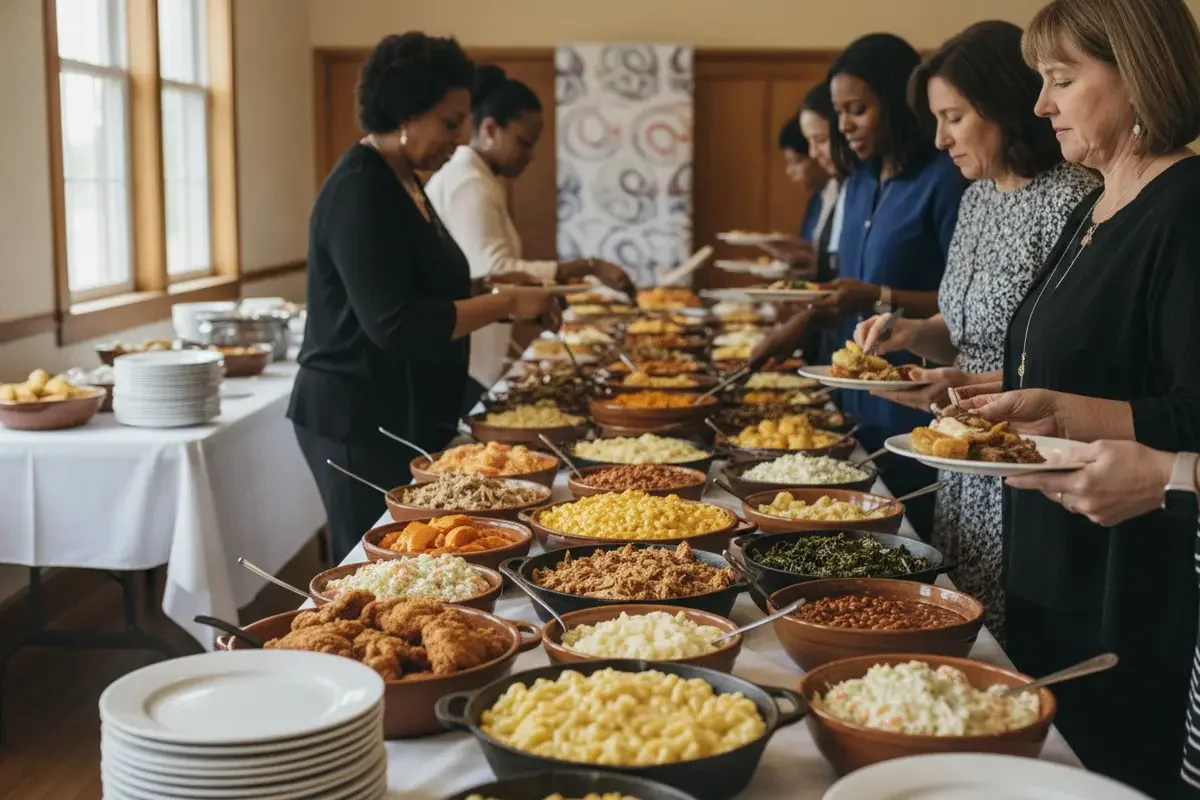
How Can You Build a Menu Guests Can Enjoy?
A thoughtful fundraiser menu should be inviting, practical to serve, and appropriate to the event length. Start with a meal style and a few clear menu choices, then verify current dishes and availability with the caterer.
Southern comfort food can make a community meal feel familiar and generous. When reviewing options, think about the full plate rather than choosing dishes in isolation. Ask how the main item and sides work together, whether guests will have time to sit down, and which serving format keeps food accessible to everyone.
Match food to the schedule. A short lunch break calls for a simpler service plan than a long dinner with speeches.
Plan for the room. A buffet requires space and a sensible line; boxed meals need a clear handout area.
Gather dietary requests early. Share requests with the caterer and confirm what can be accommodated instead of making assumptions.
Keep the menu easy to explain. Clear choices help guests know what is being served and help volunteers answer basic questions.
Verify the final details. Confirm menu, portions, service format, delivery or pickup, and any changes before the event.
For a larger community gathering, avoid adding last-minute menu complexity without checking how it changes service. More options can mean more labels, more questions, and a slower line. A focused menu that suits the crowd is often easier to coordinate and enjoy.
Think about the guest experience from arrival through the end of the program. If attendees will be standing, choose a format that is manageable to carry. If the event includes a seated program, plan service so guests are not balancing plates while trying to listen. Give volunteers a short, accurate description of the menu and the location of the serving area.
When you ask guests about dietary needs, make the request specific and give them a clear way to respond. A registration form can ask people to share relevant needs by a stated deadline, while an event contact can handle private follow-up. Send the responses to the caterer in a concise list and ask what can be accommodated. Do not promise that every request can be met until the team confirms it.
Plan how you will communicate the menu. A short event-page description can tell guests what kind of meal to expect without listing dishes that are not confirmed. If the menu is finalized, share it with volunteers so they can answer questions or direct guests to the right place. For meals with different selections, decide how guests will identify their order and how the distribution point will keep those meals separate.
It is also useful to consider the pace of eating. A relaxed dinner may allow guests to try several components and talk at their tables. A brief break between sessions calls for a meal that can be picked up and eaten within the available window. Ask the caterer what service approach suits your schedule, then leave enough time for guests to get their food without missing an important part of the program.
What Details Should You Confirm With the Caterer?
Confirm the logistics in writing so the organizer, venue, and caterer are working from the same plan. For catered events at Notch8, most catering items require a 10-person minimum and 24-hour notice; custom cakes require 48-hour notice. Final event counts are due seven days before service.
Corporate and other catered events require a 50% deposit and a signed contract. Ask questions early if your organization needs an invoice, approval paperwork, or a particular payment process. Do not assume an event is confirmed until the required agreement and deposit are handled.
Share the event date, venue address, guest arrival time, and when food should be ready.
Give an estimated headcount and ask when and how to submit the final count.
Describe the format: dine-in, buffet, boxed meals, or another arrangement to discuss.
Ask which menu items are available and whether the requested notice period applies.
Discuss dietary requests and how any special meals should be identified and distributed.
Confirm delivery or pickup details, including access, setup needs, and a contact at the venue.
Review the contract, 50% deposit requirement, and any payment deadlines.
Keep the caterer's contact information and the final plan available to event-day volunteers.
Use the catering terms and order information as part of your planning, and reach out directly to confirm how the requirements apply to your event. The catering page is another place to learn about available event support.
Turn the details into a confirmation checklist instead of relying on a long email thread. Keep the latest menu, count, delivery or pickup arrangement, venue contact, and arrival instructions together. If an item changes, update the same document and share the revision with the people who need it. Mark the final count deadline on the planning calendar well before service so that the organizer can collect responses and resolve questions in time.
Ask what the venue must provide and what the catering team will bring or handle. The venue may have rules about setup access, loading areas, serving tables, cleanup, or waste. Clarifying these points in advance helps organizers avoid expecting the caterer to use equipment or space that is unavailable. Keep those venue requirements beside the event timeline, not buried in a separate note that volunteers may not see.
For a nonprofit, approval steps may take longer than the event team expects. Find out who can sign the contract, authorize the deposit, and approve the final order. If the person coordinating the event cannot authorize payment, introduce the approver early and share the relevant deadlines. This simple handoff can prevent a complete plan from sitting unfinished while the event date gets closer.
How Can Organizers Make Event-Day Service Easier?
Event-day service runs more smoothly when responsibilities are clear and the caterer can reach the right person. Assign a lead organizer who can answer questions, coordinate with the venue, and make decisions if the schedule shifts.
Before guests arrive, walk through where food will be placed, how guests will move through the room, and where used plates or packaging will go. Keep entrances and accessible routes clear. If volunteers are helping, brief them on their specific tasks rather than asking everyone to solve issues as they appear.
Share a simple event timeline with the venue team, volunteers, and catering contact.
Mark the serving location and keep the route to it open.
Choose one person to greet the catering delivery or pickup and confirm the order.
Tell volunteers how the line should flow and who can answer guest questions.
Keep a backup point of contact available if the main organizer is on stage or greeting donors.
Build a little breathing room into the schedule. If guests arrive late or a speaker runs long, a plan with no flexibility can create pressure around food service. Let the caterer know about the program and ask what timing is realistic for the service style you choose.
Some nonprofits also need a quiet meal setup that leaves space for conversation. Others want food to be a central part of a community gathering. Explain the experience you want, not just the number of plates, so the team can help you consider a practical arrangement.
On event day, hold a short volunteer briefing before doors open. Review the order of events, where guests enter, where meals are served, who answers menu questions, and whom to contact if something needs a decision. Name a backup lead in case the primary organizer is occupied. A clear handoff prevents two people from giving conflicting instructions and allows the rest of the team to focus on welcoming supporters.
Keep a printed or readily accessible copy of the final plan with the lead. It can include the venue contact, catering contact, timing, layout, count, and the agreed plan for dietary requests. Do not rely on one volunteer's memory for the details. If the schedule changes, the lead can quickly share the update with the venue and catering contact, then give volunteers one consistent message.
After the meal, assign someone to check the room and confirm what the venue expects for cleanup. Collect signs, remove personal items, and direct used packaging or dishes according to the agreed plan. A named closeout lead makes the end of the event less rushed and ensures the team can thank volunteers and guests without leaving basic tasks unassigned.
How Do You Plan Catering Around a Fundraising Budget?
Start with the amount your organization has set aside for food service, then compare the full plan rather than looking at menu choices alone. The menu, number of guests, service format, venue requirements, and delivery arrangements all affect what organizers need to coordinate.
Set aside time to confirm the headcount process and contract terms. Because final event counts are due seven days before service, nonprofits should establish an RSVP deadline early enough to review attendance and submit the required number on time. Ask the caterer which details may still change after that point.
When inviting guests, avoid promising a specific dish or accommodation until it has been confirmed. If tickets or sponsorships include a meal, keep the event description aligned with the agreed menu and let attendees know how to communicate dietary needs. Clear communication helps prevent confusion and lets organizers focus on fundraising.
For planning ideas beyond this event, explore event catering in Florence, SC and the restaurant's guide to Southern comfort food. Use current menu information when you are ready to choose dishes.
To compare options fairly, list the pieces of the plan that are confirmed and the items that still need an estimate or decision. For instance, separate the expected number of guests from the final count, and distinguish food choices from service needs such as delivery, pickup, room setup, or volunteer support. This makes it easier for the event committee to see which questions affect the budget and which affect logistics.
Do not build a plan around unconfirmed attendance or assume that a change will be possible after the final count deadline. Use RSVPs to make a sensible estimate, set an internal cutoff before the caterer's deadline, and ask the team what happens if your organization needs to revise the order. A buffer in the planning calendar is useful even when the actual number of meals is still uncertain.
Think about the meal in relation to the full event budget and guest promise. If food is included with a ticket, make sure the description says what attendees can expect and does not overstate what is provided. If donors are being thanked with a meal, a thoughtful schedule and clear welcome can support that experience without adding unnecessary menu complexity. Compare the practical requirements of each service format before selecting one.
A simple planning worksheet can keep the budget conversation grounded: record the approved amount, estimated attendance, meal format, required deposit, final-count deadline, and any open questions. Ask the person responsible for finances to review commitments before you announce ticket details or sign an agreement. That way, the event team can make tradeoffs deliberately rather than discovering late in the process that an essential deadline or requirement was missed.
Contact Notch8 about catering your event
Frequently Asked Questions
Does Notch8 deliver catering in the Pee Dee?
Catering delivery is available for orders of 10 or more plates in the greater Florence area. Contact the team with your event location and details to confirm arrangements.
How much notice should a nonprofit give?
Most catering items require 24-hour notice, while custom cakes require 48-hour notice. Confirm your specific menu and timing with the catering team.
When is the final guest count due?
Final event counts are due seven days before service. Set an RSVP deadline early enough to review attendance and submit the final number on time.
Does a catered fundraiser need a contract and deposit?
Corporate and other catered events require a signed contract and a 50% deposit. Ask the team about the steps and timing for your event.
Can our group request special meals?
Share dietary requests while planning and ask which accommodations are available for your event. Confirm agreed details before communicating them to guests.
With an agreed menu, accurate headcount, and clear event-day roles, your nonprofit can welcome supporters to a comfortable meal and keep attention on the work that brought everyone together.
