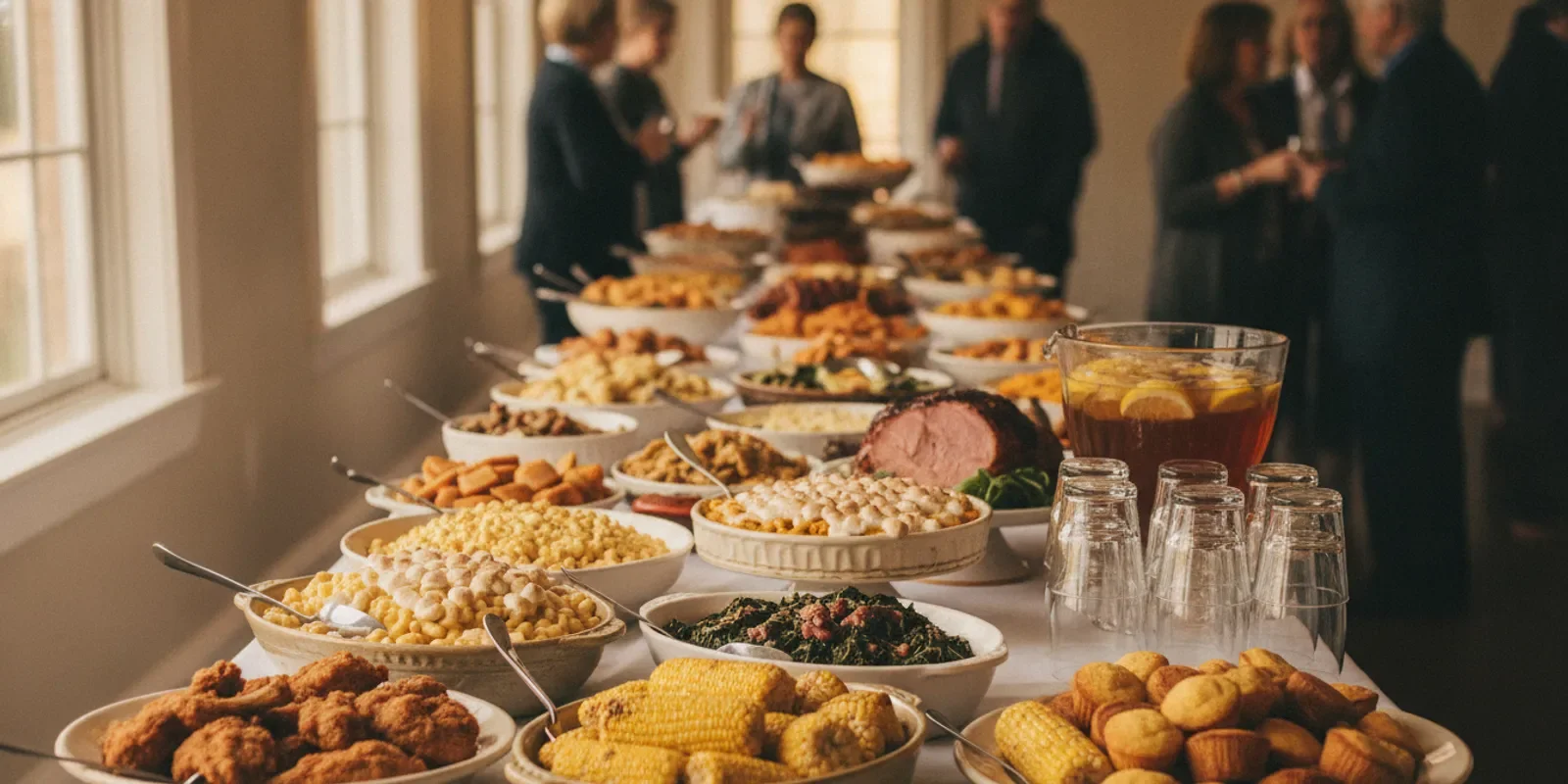
How to Plan Catering for an Event in the Pee Dee
Planning food for a gathering is easier when you work through the decisions in order. If you are wondering how to plan catering for an event in Florence, SC or the Pee Dee, start with the guest count, service style, venue, and schedule, then confirm the menu and order details with your caterer.
Contact us to plan your event catering
How to Plan Catering for an Event in the Pee Dee
Answer capsule: Set the event basics first: date, location, likely headcount, budget, meal time, and how guests will serve themselves. These details determine which menu and service plan will work.
Write down the event date and the time food needs to be ready. Include the venue address, room access time, and any restrictions on outside food, warming equipment, or cleanup. Ask the venue whether tables, serving utensils, plates, and refrigeration are available; do not assume those are included.
Next, estimate attendance. For a casual family celebration, begin with confirmed invitations and a realistic allowance for late replies. For a work event, ask the organizer for the latest RSVP count. A headcount is not just a number: it affects portions, packaging, delivery logistics, and the amount of time needed to set out food.
Event date and the time the meal should be served
Venue address and delivery access instructions
Estimated guests, including children where relevant
Meal type: breakfast, lunch, or dinner
Available setup space and serving equipment
Dietary needs or ingredient questions to raise with the caterer
Keep one person responsible for updates. If several hosts share planning, have them send changes through that coordinator so the final count and instructions do not conflict. For a useful starting checklist, consider the Princeton event-planning guidance, which recommends checking whether food and beverages can be served in the selected room before finalizing it.
It helps to separate decisions into must-haves and preferences. The event date, room access, budget range, and service time are usually fixed constraints. Menu variety, dessert, and serving arrangement may have more room to change. Write both lists down before calling so the discussion stays focused. If a venue has not approved outside food, resolve that before choosing dishes or placing an order.
For example, a family gathering in a community room may have a fixed end time and only one accessible serving table. That points toward a simple layout and a menu that can be served without a long wait. A workplace lunch may have a firm meeting break, which makes timing and straightforward distribution more important than elaborate table service. These are different planning problems even if the headcount is similar.
How to Plan Catering for an Event Around Your Guest Count?
Answer capsule: Choose a service style that fits the room, schedule, and guest behavior. A buffet suits a relaxed meal with a place to serve; boxed meals can make distribution simpler when guests have limited time.
Think about how guests will eat before choosing dishes. A seated family meal can support a broad spread with sides, while a meeting with a short break may call for individually packaged meals. Consider whether attendees will arrive all at once, move through a program, or eat in shifts.
Service format | Useful when | Plan for
Buffet or shared spread | Guests can gather and serve themselves | Table space, serving utensils, and a clear line
Boxed meals | Guests need quick, individual portions | Labels, distribution order, and dietary identification
Plated meal | The schedule and seating are formal and coordinated | Serving time, seating plan, and venue staffing arrangements
Drop-off trays | The host can handle setup and service | Access, arrival window, holding temperature, and cleanup
Ask the caterer to clarify exactly what the order includes. Food delivery does not automatically mean room setup, attendants, dishes, or post-event cleanup. Confirm who receives the order and who will arrange the food once it arrives. Review the venue’s food-service rules as part of that conversation, since room access and equipment can affect your format choice.
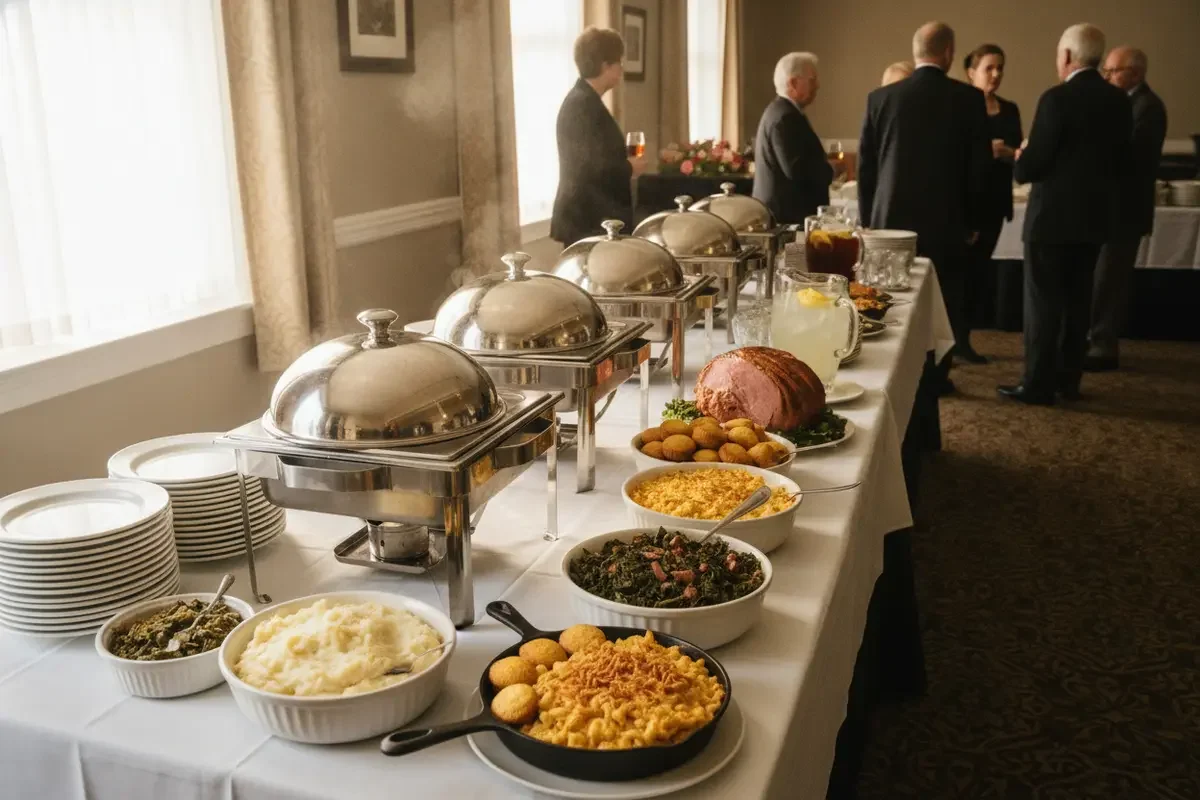
Walk through the guest experience from arrival to the end of the meal. Where will guests enter? Will they take a plate and sit, collect a box as they arrive, or wait until a program break? A layout that seems convenient on paper can create a bottleneck if guests must cross the room or pass through a narrow doorway. Mark the serving area, seating, and exit route on a quick sketch, then share it with the venue contact.
Think about how many guests can be served at once. A single buffet line can work for a small group with a flexible schedule, while a larger gathering may need a second serving point or staggered release. Do not assume the room can accommodate every arrangement. Ask the venue about table dimensions and available space, and confirm with the caterer what equipment the order includes.
How Can You Build a Menu Guests Will Enjoy?
Answer capsule: Build the menu around the occasion and the way food will be served. Choose compatible main and side options, check dietary requests directly, and verify current offerings before finalizing.
Southern comfort food can make a gathering feel generous and familiar. Start with the main dish, then select sides that complement it rather than repeating the same flavors and textures. For example, pair a hearty main with a vegetable side and a starch, and consider a dessert if the event calls for a complete meal.
For a mixed group, variety matters more than a long menu. Include options with different textures and flavor profiles, and ask about ingredient information for guests who have allergies or restrictions. Do not promise that an item is allergy-safe unless the caterer confirms its preparation and handling details.
Choose a main dish that fits the meal and event tone.
Add sides with contrasting textures and flavors.
Ask guests or the organizer about dietary needs early.
Confirm whether items arrive ready to serve or need heating.
Check the current Notch8 catering menu for available selections.
Menu details and availability can change, so use the current menu or confirm directly rather than relying on an old event plan. Notch8 provides catering for corporate and social occasions and offers flexible menu options. Its catering team manages more than 800 events annually, bringing practical event experience to the conversation.
As a second perspective on menu decisions, Millersville University’s conference catering tips note the value of considering varied tastes and dietary preferences when planning meals. Translate that into a short, clear menu rather than an unwieldy list of choices.
Match the menu to the time of day and the event's rhythm. A breakfast buffet before a training session needs to be easy to serve and eat before attendees settle in. A social meal can allow more time for guests to mingle and return for sides. For a late-afternoon gathering, decide whether the meal is intended to replace dinner or serve as a lighter refreshment; tell guests clearly so their expectations match the menu.
Think about temperature and serving equipment for each choice. Foods that need to stay hot or cold require a workable plan at the venue. Ask whether the order arrives ready to serve, whether reheating is expected, and what equipment is needed. If the room lacks a kitchen, choose a plan that does not depend on facilities you cannot access. Likewise, consider whether dishes are easy to serve in the available space rather than selecting items that require complicated carving or last-minute assembly.
Keep the selection manageable. A menu with a main, a few complementary sides, and a suitable dessert can feel generous without overwhelming the serving table. More choices also mean more labels and more questions for the host. Confirm portions and menu combinations with the catering team rather than trying to calculate every quantity alone.
What Is a Practical Catering Timeline?
Answer capsule: Begin early, confirm the menu and logistics well before service, then provide the final count by the required deadline. For Notch8, most catering items require 24-hour notice, custom cakes require 48-hour notice, and final counts are due seven days before service.
These minimum notice periods are not a substitute for early planning. Larger events, busy dates, or custom requests may need more lead time. Ask about availability as soon as the date and venue are known.
As soon as the date is set: Confirm the venue, approximate guest count, meal time, and delivery or pickup needs.
During early planning: Review the catering information and current menu, and contact the team about the event format.
Before placing the order: Share the menu choices, estimated quantity, dietary questions, and access instructions.
At least 48 hours ahead for a custom cake: Make the request with the required notice and confirm details.
At least 24 hours ahead for most items: Submit the order in line with the notice requirement; earlier is better when possible.
Seven days before service: Provide the final event count as required.
Before event day: Reconfirm arrival time, contact person, parking or loading access, and the plan for setup.
On the day: Make sure someone is ready to receive the delivery and handle serving arrangements.
For corporate and other catered events, a 50% deposit and signed contract are required. Review the terms and ask questions before confirming, so the host understands the commitment and payment steps.
It also helps to assign a deadline for your own decisions. For example, choose a date to gather RSVPs, another to approve the menu, and a final reminder for the headcount deadline. This avoids discovering that a key answer is missing just as the caterer needs confirmation. Keep a simple planning note with the latest number, menu version, and venue contact so everyone works from the same information.
A sample workback plan makes the deadlines easier to manage. If your event is on a Saturday, settle the venue and approximate count as early as possible, then use the week before service to confirm the final number by the required seven-day point. The exact order date depends on what you select, but most items need at least 24 hours and custom cakes need 48 hours. Treat those as minimum notice periods, not the ideal time to begin planning.
Set calendar reminders for each handoff: RSVP collection, menu review, final count, and event-day receiving contact. If the guest count is still changing near the deadline, ask the catering team what options are available rather than assuming changes can be made. Keep the contact person informed if the venue, delivery instructions, or schedule changes.
View the catering menu and start planning
Which Details Should You Confirm With the Caterer?
Answer capsule: Confirm the order, deadline, arrival plan, payment terms, and responsibilities in writing. Clear answers reduce last-minute uncertainty for both the host and the food team.
Use a short checklist during the planning conversation. Tell the caterer what the venue allows and ask what the delivery includes. If the location has a loading entrance, security desk, or limited parking, share those instructions in advance.
What is the confirmed menu and quantity?
What is the deadline for changes and the final count?
What time will the food arrive, and who should receive it?
Are setup, serving utensils, plates, or napkins included?
How should food be held and served after delivery?
What payment, deposit, and signed agreement are required?
Who should the host call if the schedule changes?
For specifics, review the catering terms and order information. Keep copies of the confirmed order and venue instructions together so the event-day contact can find them quickly.
For workplace meals, note the meeting start and break duration as well as the building’s delivery procedure. A receptionist, security desk, or restricted entrance may require a named recipient and a particular arrival point. For family events, identify a host who can step away briefly to receive the food, and decide in advance where trays should be placed.
Turn the confirmation into a short event-day brief. Include the delivery window, the receiver’s name and phone number, the venue entrance, the final menu, and where each item should go. Share it with anyone who might cover for the host. This is especially useful when the person who placed the order will be occupied greeting guests or speaking during the meal.
If the venue changes its rules, update the caterer promptly. A new room or entrance can affect unloading and setup. If your event has a tight program, identify a realistic arrival window and a backup contact who can respond if the primary receiver is delayed. Agree on how schedule updates should be communicated, rather than assuming a message will reach the right person.
How Do You Plan for Dietary Needs and Guest Comfort?
Answer capsule: Collect dietary requests early and pass them to the caterer as questions, not assumptions. Make serving and labeling easy to understand, and confirm ingredient or cross-contact concerns directly.
When invitations go out, give guests a clear way to share dietary needs. Ask the organizer to gather responses in one place, then summarize them for the caterer. Include allergies and restrictions without asking guests to disclose more than they wish.
Labels can help guests identify dishes, but labels should only state ingredients or dietary suitability that the caterer has confirmed. Keep special portions separate when instructed, and designate someone to answer basic questions. If an allergy is severe, discuss handling and cross-contact with the caterer and make a plan based on their response.
Comfort also includes the room setup. Make sure guests can reach the serving area, that there is space for mobility aids, and that the meal timing works with the event schedule. For an older audience or a family gathering with children, a less crowded serving line and accessible seating can make the meal easier for everyone.
When the venue has more than one room or serving area, decide where guests will eat and where the food will be staged. Keep the route between those areas clear, and avoid placing the buffet where it blocks a doorway or the main path. If guests will arrive at different times, ask how the menu should be arranged so late arrivals can find the items they need.
Be specific when gathering dietary information. “Vegetarian,” “no dairy,” and “food allergy” can mean different things to different people, so do not interpret a request on your own. Pass the guest’s wording to the caterer and ask what can be accommodated. If no suitable option is confirmed, tell the guest plainly and discuss a safe alternative. Never label a dish as free of an ingredient based only on appearance or memory.
For a buffet, place labels where guests can read them before serving. For individually packed meals, match each package to a confirmed name or clear label, and keep special meals apart as instructed. Choose a point person who knows the arrangement but does not have to guess at ingredients. A simple, accurate system gives guests a chance to make informed choices without slowing down the line.
What Should You Do on Event Day?
Answer capsule: Keep the delivery handoff simple: have the venue ready, the contact person available, and the serving plan settled before food arrives. That lets the host focus on guests instead of solving logistics at mealtime.
Before the delivery window, check that the room is open and the route to the setup area is clear. Keep the order confirmation and caterer contact details close. The designated receiver should know what was ordered and where each item belongs.
Once food arrives, verify the order against the agreed menu. Follow any instructions about holding or serving. Do not leave perishable food sitting out longer than appropriate; ask the caterer for handling guidance for the specific items. After the meal, follow the venue’s cleanup rules and clarify who is responsible for leftover containers and waste.
Notch8 serves the Florence area from 600 A Pamplico Highway, Florence, SC 29505. Catering delivery is available for orders of 10 or more plates within the service area. If you are arranging pickup or need directions to the restaurant, check the current hours and directions before you go. Restaurant hours are Wednesday-Saturday, 11 am-8 pm.
For a relaxed meal outside an event, explore the Southern menu or browse our guide to Southern comfort food for familiar dishes and pairings.
Save a copy of the final order, the delivery contact, and any venue instructions where the event-day host can reach them. If the schedule changes, use the contact method agreed with the caterer rather than relying on a message passed through several people. A brief handoff plan helps the meal fit into the larger gathering.
Build in a few minutes for receiving and arranging the order before guests are ready to eat. Check the table, serving utensils, and labels, then let the designated contact know where to find the event-day brief. If something differs from the confirmation, raise it immediately with the caterer rather than trying to resolve a menu or delivery question through guesswork.
Contact Notch8 to discuss your catering plans
Frequently Asked Questions
How far ahead should I order catering?
Most Notch8 catering items require 24-hour notice, while custom cakes require 48-hour notice. Contact the team earlier for availability and planning, especially for a larger event or a date with many moving parts.
When is the final guest count due?
Final event counts are due seven days before service. Provide an accurate count by that deadline and ask how to handle any late changes.
Is delivery available for small events?
Catering delivery is available for orders of 10 or more plates. Confirm service area and delivery details directly when discussing your event.
Does a catering order include setup?
Do not assume setup or service is included. Ask what is part of the order, what arrives with the food, and what the host or venue must provide.
What should corporate clients expect when confirming?
Corporate and other catered events require a 50% deposit and a signed contract. Review the terms with the catering team before you finalize the order.
With a clear count, a suitable menu, and confirmed delivery details, you can make the meal one less thing to worry about on event day.